
The Future of UK Road Transport: Insights Ahead of Commercial Vehicle Show 2026
March 25, 2026
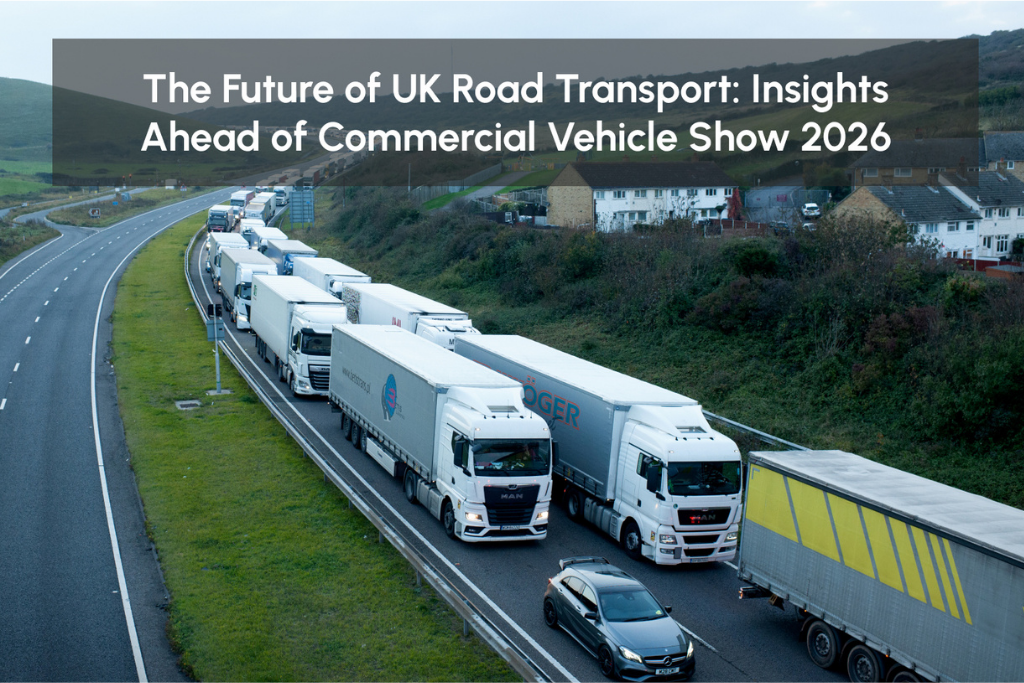


When people talk about the future of road transport, it usually sounds quite far away.
Electric fleets everywhere. Fully automated planning. Seamless operations.
That’s not how most operators would describe their day.
Right now, it looks more like this.
A route gets planned in the morning and changes before midday.
Drivers get delayed at sites longer than expected.
Sometimes, backloads fall through — and suddenly you are running empty miles.
Someone in the office is trying to keep things aligned while calls keep coming in.
So when we talk about the future, it helps to stay close to reality.
Because the future of UK road transport is not a clean shift from one system to another. It is happening in layers, on top of what already exists.
And most of it is already visible.
The Industry Is Moving, But Not in Straight Lines
There is always talk about transformation.
But if you look closely, most transport businesses are not transforming. They are adapting in pieces.
One part of the operation improves. Another still runs the old way.
You might have tracking in place, but planning still happens manually.
You might have a system for compliance, but communication still depends on phone calls.
So the business ends up sitting somewhere in between.
That in-between state creates a lot of friction.
Not because people are doing anything wrong. Just because things have been added over time rather than built as a whole.
Margin Pressure Is Changing Behaviour
In fact, this is probably the biggest shift that does not get enough attention.
Margins are tighter than they were a few years ago. That is not new. But the way it is affecting day-to-day decisions is.
Operators are paying closer attention to things that were earlier ignored.
Empty miles are being questioned more aggressively.
Waiting time is no longer just accepted as part of the job.
Subcontracting decisions are being looked at more carefully.
There is also more pressure from customers.
Delivery windows are tighter. Updates are expected, not requested. Delays need explanations.
At the same time, rates do not always reflect that pressure.
So operators are stuck balancing service expectations with cost control.
This is where small inefficiencies start to matter a lot more. This is exactly where the future of UK road transport is taking shape — not in theory, but in how daily operations actually run.
Planning Is Becoming the Real Bottleneck
Most people assume capacity is the main constraint.
In many cases, it is not.
The bigger constraint is how effectively that capacity is used.
Two fleets of the same size can perform very differently depending on how they are planned.
One runs smoothly. The other is constantly adjusting.
The difference usually comes down to visibility and coordination.
Who knows what is happening during the day.
How quickly plans can be adjusted.
How much relies on individuals versus systems.
Planning no longer acts as just a starting point for the day. It is something that needs to adapt continuously.
And most setups are not built for that.
The Problem with “Add Another Tool”
Over the years, many operators have added tools to fix specific problems.
Tracking gets added. Then compliance. Then something for routing.
Individually, each one helps.
But over time, it creates a different problem.
Teams spread information across systems. Teams switch between systems. Some things still sit outside in spreadsheets or messages.
When something changes, it is not always clear where to update it first.
So people rely on experience. Or memory. Or calling each other.
That works when the team is small or experienced.
Managing the operation becomes harder as it grows.
Drivers Feel the Gaps First
A lot of these operational gaps show up most clearly with drivers.
They are the ones dealing with the outcomes of planning decisions.
When instructions are unclear, drivers spend time figuring things out.
When schedules are off, they end up waiting or rushing.
And when updates are delayed, they are the ones facing the customer.
Over time, that affects how the job feels.
And in a market where good drivers are hard to retain, that matters.
Better planning is not just about efficiency. It directly affects driver experience.
What You Will Notice at CV Show 2026
If you walk the show floor with this in mind, a few things stand out.
There is still a strong presence of vehicles, as expected.
But there is more focus now on how those vehicles are managed.
Conversations are shifting more towards planning.
There’s greater emphasis on visibility.
And more tools are emerging to reduce manual coordination.
You will also notice that not all solutions are trying to do the same thing.
Some are very focused. Others are trying to bring multiple parts of the operation together.
That distinction is becoming more relevant.
Because most transport issues are not isolated. They are connected.
Where HaulierMagic Fits In
This is where HaulierMagic comes into the picture.
Not as something that replaces everything overnight, but as a way to bring different parts of the operation into one flow.
Planning jobs, tracking vehicles, handling compliance, managing invoicing.
Instead of switching between systems, the idea is to see how the day is unfolding in one place.
That changes how decisions get made.
You are no longer guessing where a vehicle might be.
There’s no need to call and check what has already happened.
Plans don’t need to be rebuilt from scratch every time something shifts.
It is less about adding capability and more about reducing friction.
And most operators already know where that friction sits.
A More Realistic View of What’s Coming
In reality, the future of UK road transport is being built through small, continuous improvements.
It will come through adjustments that make the day easier to run.
Fewer surprises.
Better use of time.
Clearer visibility across the operation.
That may not sound dramatic.
But for most operators, that is exactly what they are trying to get to.
Meet HaulierMagic at the CV Show
If you are attending the Commercial Vehicle Show 2026, we will be there.
📍 Booth 5A03
🗓 21st–23rd April
If you are looking at how your operation might evolve over the next few years, it is worth seeing how this works in practice.
Final Thought
The future is not something that shows up all at once.
It shows up in how your day runs.
And most of the time, the biggest improvements come from fixing what already feels difficult.
Related Blogs
Why Every Logistics Professional Should Attend Multimodal 2026 at NEC Birmingham
Commercial Vehicle Show 2026: 7 Operational Upgrades Every UK Hauliers Should Consider