
Warning Signs Your Haulage Business Has Outgrown Its Current Setup
July 1, 2026
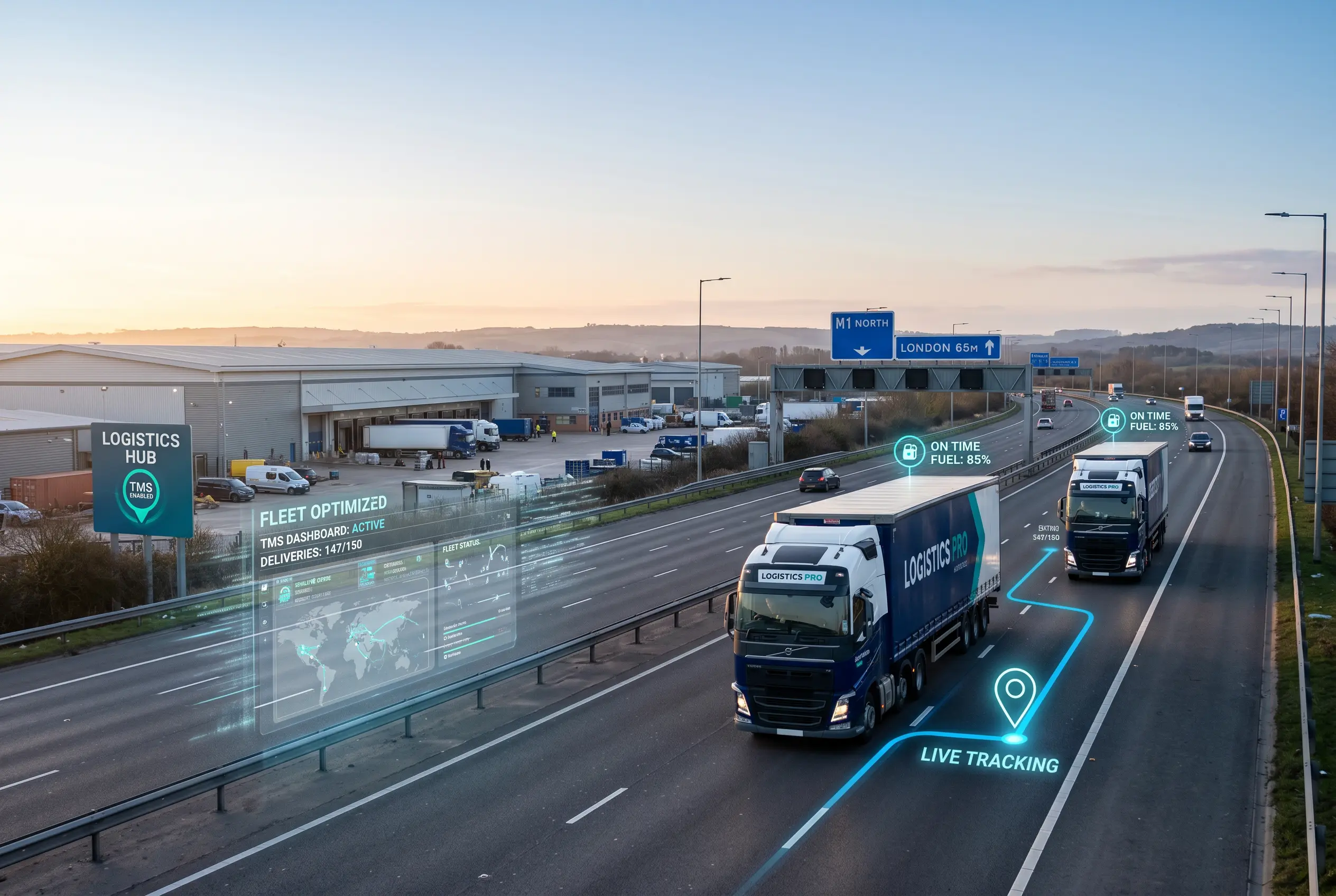


Introduction
Plenty of haulage operators put off moving to a transport management system until a major customer complaint forces their hand. Research suggests more than half of consumers will switch supplier after a single poor delivery experience. By the time the complaint lands, the damage is already done.
The cost of running on spreadsheets, manual planning and gut instinct compounds quietly. Competitors who have already made the move are trimming empty miles, tracking deliveries live, and taking on more volume without adding planners. This piece sets out the warning signs that your operation has outgrown its current setup, and what changes once a system takes the strain.
HaulierMagic is a cloud TMS built specifically for UK road haulage operators. It has supported UK fleets for more than 20 years and now runs across more than 200 UK fleets, with 99.8 per cent uptime. Throughout this piece, the product is used to show how a UK focused system addresses each of these warning signs in practice.
Manual planning is consuming your day
Planners across UK haulage operations spend one to two hours every morning arranging routes by hand. That is not a minor inefficiency. It is high value time consumed by a repetitive task that route optimisation handles in minutes. Those hours could go toward sales, customer care or process improvements that grow revenue, rather than simply managing today’s deliveries.
Time spent on route creation
Manual sequencing adds time and complexity when you are trying to build routes that meet customer expectations while keeping vehicles efficient. A planner plots the next day’s deliveries using a spreadsheet or basic software that was never designed for the routing complexity of a modern operation. The human mind cannot juggle every factor at once when several vehicles are running multi-drop work.
Free mapping tools make this worse, not better. They do not address the realities of modern logistics, leaving planners to wrestle with inefficiencies that compound over time. A transport management system flips this dynamic. Automated job planning generates balanced routes in minutes at any scale, letting the team focus on exceptions and service quality rather than endless rearranging.
Impact on scalability
Planning five drivers by hand works fine. Planning fifty becomes a daily scramble. As the stop list lengthens, manual planning bogs down because there are simply too many possible orders to sort through. Route planning is a genuinely hard mathematical problem, and complexity rises sharply as customers and constraints increase.
Here is what happens when more business arrives and the process cannot keep up. You throw more trucks and drivers at the problem than you actually need. Costs escalate out of proportion to the extra income, draining profit from new business before you can bank it. Manual planning leaves operating costs higher than they need to be, while optimised routing can reduce total mileage by around 15 to 30 per cent.
Optimised planning lets you scale without immediately expanding the fleet. The software replaces hours of manual scheduling with strong routes generated in seconds. It maximises stops per route, balances workloads so no driver is overloaded while another idles, and delays the need for extra vehicles.
Signs the process has become unsustainable
A few patterns, tracked over a single week, tell you whether the process is straining: transport costs rising faster than revenue, drivers working regular overtime to finish routes, a growing number of where is my order calls, vehicles needing repairs sooner than expected, and a high share of empty or deadhead miles.
There is another risk that shows up in no metric at all. When the planning process lives entirely in one person’s head, turnover becomes a serious operational problem. Manual planning depends on tribal knowledge, the unwritten logic an experienced planner applies daily. If your lead planner takes time off or leaves, new staff face a steep learning curve with nothing to fall back on.
Without a system, information on cost per drop and other cost to serve data stays vague or non-existent, so you cannot accurately predict the cost of taking on new business. Manual planning rarely leaves a usable data trail, which makes it impossible to see whether routes were efficient, balanced or on time. That turns coaching and forecasting into guesswork. HaulierMagic captures each job once at the point of order, building the data trail as the work is done rather than leaving it to be reconstructed later.
You cannot track deliveries in real time
The first symptom shows up in the customer service queue: phones ringing with where is my order calls, and staff pulled away from real problems to read out delivery statuses they can barely confirm. Most consumers will leave a brand after just two bad experiences, and each unanswered status question chips away at trust you have spent years building.
Customer service under strain
A where is my order call signals more than curiosity. It reveals a broken post-purchase experience, because customers should not have to chase their own deliveries down. Real-time tracking cuts these inbound queries sharply. Dispatch notifications, transit updates and final delivery confirmations become accessible without the team lifting a finger, and a customer portal lets clients check status themselves, so staff stop reporting location data and start solving actual problems.
A lack of transparency creates frustration and anxiety that drags satisfaction scores down. Customers with access to live tracking simply do not call, which is a direct reduction in support load with no extra headcount.
Reactive problem solving
Without visibility, you are always responding after something breaks. Reactive freight management leans on historical data and short-term fixes, firefighting rather than forward planning.
Real-time tracking flips this. Alerts surface issues immediately, giving the team time to communicate accurate updates, reroute drivers and contain disruption before it reaches the customer. Delays happen regardless of how well a day is planned. What separates good operators from struggling ones is how fast a problem gets identified and addressed.
Lost visibility across multiple depots
Operators running across several locations face a sharper version of this problem. You cannot see where every vehicle is at the right moment, and that gap creates slow decisions and weak operational control. When a disruption hits one depot, the ripple reaches others before anyone has the full picture, and poor communication between fleet, dispatch and operations teams compounds every delay.
Fleet data scattered across different systems, teams and reports forces managers to gather information by hand before they can act, and that lag is expensive. A system consolidates everything, vehicle positions, job status and delivery confirmations, into one place. A live arrivals board gives coordinated oversight from booking to proof of delivery without the frantic calls between depots.
Rising fuel costs and empty miles
Fuel is one of the biggest operational costs in haulage, yet most operators cannot say what share of their mileage generates zero revenue. Department for Transport data shows that around 30 per cent of all HGV kilometres travelled by GB-registered vehicles run empty, which came to roughly 5,776 million kilometres in 2023 alone. That is a cost drain happening every single day, and most operations are running blind to it.
The inability to measure empty running
Empty running happens when vehicles travel without freight after a delivery or on the way to a pickup. Industry estimates put empty mileage at somewhere between 15 and 30 per cent of all truck miles. For a vehicle covering 100,000 miles a year at 20 per cent empty running, that is 20,000 wasted miles burning fuel, driver hours and maintenance budget with no revenue against them.
Here is what most people miss. An empty vehicle does not consume zero fuel. An unloaded tractor unit still burns 60 to 70 per cent of the fuel it would at full load. Empty miles are not free repositioning moves, they are a recurring cost with nothing coming back.
Spreadsheets fail to capture this in any meaningful way. You might sense the problem, but quantifying it means tracking every movement. Without that data, you cannot identify which routes consistently generate empty return legs, or which customers create unbalanced freight flows. A system captures this automatically, flagging the empty running patterns that manual methods miss entirely, while truck-safe route planning keeps vehicles on efficient, compliant roads.
Route inefficiency indicators
Several cost patterns point to route inefficiency: fuel costs rising faster than delivery volumes, and vehicles needing maintenance ahead of schedule. These are not random, they reflect excessive distance covered relative to the revenue earned.
The numbers are worth stating plainly, though the figures below come from European industry analysis and are converted to approximate sterling, so treat them as indicative rather than exact. A standard 40 tonne articulated vehicle running 120,000 km a year with 30 per cent empty running carries somewhere around £24,000 to £39,000 in direct empty mile costs. That covers fuel during non-revenue movement, driver wages, tyre wear, maintenance, depreciation and tolls that apply regardless of load. For a 10 vehicle fleet, annual empty running cost runs to roughly £130,000 to £170,000, money that flows straight out of the business with nothing coming back.
Even a marginal improvement moves the needle. On thin margins, a five percentage point reduction in empty running, from 30 down to 25 per cent, recovers meaningful capital across a year.
Cost per delivery blind spots
You know your total monthly fuel bill, and you know your total delivery count. What you do not know is the cost breakdown per customer, per route or per vehicle type. That gap is what prevents informed decisions about pricing, customer profitability and route viability.
The margin maths is unforgiving. On the European figures above, revenue of around £1.10 per loaded kilometre against an operating cost of around £1.05 leaves only a few pence of margin per loaded kilometre, while every empty kilometre consumes most of a pound in pure cost. That means running many loaded kilometres at margin just to offset a single empty one. Carriers operating at 30 to 35 per cent empty miles report profit erosion of 15 to 35 per cent of potential revenue.
A system calculates cost per delivery automatically, factoring in distance, fuel, driver time and vehicle use. The analysis reveals which work is actually profitable and which customers are quietly draining resources.
Paperwork and POD processing delays
Paper-based proof of delivery has a way of quietly strangling cash flow before you notice. Drivers return with stacks of signed dockets, each one needing scanning, manual entry and filing before a single invoice can move. Trade document processing is estimated to account for between 10 and 20 per cent of total transportation costs. That is not minor administrative overhead, it is a profit drain hiding in plain sight.
Manual document bottlenecks
The pattern is familiar. The driver completes deliveries, the signed POD sits in the cab for two days, and the accounts team waits. When the paperwork finally surfaces, signatures are missing or illegible, so staff start chasing drivers and customers for clarification. Work completed on Monday cannot be billed until Thursday or Friday, and that gap costs you every week.
Cash flow impact from slow POD returns
No POD means no invoice, and no invoice means no cash. It is that simple. Days sales outstanding in the transport sector can easily exceed 45 or even 60 days once POD delays stack up across the job list. The work is done and the vehicles are back, but payment is somewhere in a paper trail waiting to be processed. Accounts receivable backlogs build quietly until working capital tightens and you are funding the operation on credit you should not need.
Invoice generation delays
Without a system connecting delivery records to billing, invoicing falls days or weeks behind the actual work. Job details scatter across systems, inboxes and clipboards, and the cost of correcting a single faulty invoice, once admin time and dispute resolution are counted, can be significant.
Digital POD changes this entirely. The moment a driver submits a completed electronic POD through the driver mobile app, the invoice can go out the same day. HaulierMagic builds invoices from captured job and delivery data, so same-day billing becomes a straightforward output of removing paper from the process rather than an ambition.
Customer complaint patterns
Late deliveries already top the list of customer complaints in delivery research, and documentation delays make it worse. Customers cannot verify delivery status, confirmation arrives late or not at all, and when a dispute arises over damaged goods, a crumpled paper form is your only evidence. That is a difficult position to defend.
Spreadsheets are running your multi-depot operation
A large share of supply chain managers still treat a spreadsheet as a management system. At a single depot, a spreadsheet is merely inconvenient. Across multiple depots, it becomes a structural problem. Each location builds its own files, defines capacity its own way and tracks jobs its own way, and the data never talks to itself. Siloed or incorrect data is estimated to cost businesses a meaningful share of annual revenue through duplication, errors and missed coordination.
Data silos between locations
Job data sits at one depot, vehicle records at another, customer details spread across both, and none of it connected. Managers at each site work with partial visibility. They cannot see what load capacity exists three miles away, or whether a neighbouring depot already has a vehicle running empty past a customer they are trying to serve. Cross-functional coordination stops before it starts.
Duplicated work and allocation errors
Multiple teams build similar spreadsheets to answer the same operational questions. Different users edit the same file at once, silent overwrites happen with no alert, and nobody catches the error until a job gets double-booked or a vehicle goes unassigned. Manual reconciliation adds hours that a system would handle automatically. Those hours never show up on a profit and loss statement, but they accumulate every single week.
No standardisation across depots
One depot defines available capacity one way, another defines it differently, and the result is allocation conflicts that cost real money. Standardising and integrating core data across locations lets planning cycles shrink substantially and cuts errors. That is not a marginal improvement, it is a structural one.
Reporting limitations and blind spots
A spreadsheet is retrospective by design. It tells you what happened, not what is happening right now. Research has found that the overwhelming majority of large spreadsheets contain errors, and most multi-depot operations run far more rows than the threshold where errors creep in. The reports look clean, but the underlying data often is not.
A system connects jobs, costs, mileage and driver status across every location in real time. One platform, no reconciliation, no version conflicts, no blind spots between sites. The spreadsheet worked when you had one depot and twenty customers. It does not work now.
Conclusion
The warning signs are clear: manual planning consuming hours a day, no visibility on deliveries, empty running draining the fuel budget, paperwork delays choking cash flow, and spreadsheets creating data silos across depots. Each inefficiency compounds the others, eroding margin while competitors who have made the move pull ahead.
The choice is between proactive investment and reactive crisis management. Delay only widens the gap between your costs and a leaner competitor’s. Your current setup might have worked five years ago, but today’s haulage environment rewards real-time visibility, automated planning and decisions made on data. The question is not whether you need a system, but how much longer you can afford to wait.
HaulierMagic is built for UK road haulage operators and supports more than 200 UK fleets, including operators such as Wannop, Chiltern, Firmin, David Watson, Jack Richards & Son and Cool Solutions. To see how it fits your operation, arrange a demo on 07984 791484 or contact us here.
Key takeaways
The cost of running on spreadsheets and manual planning compounds quietly. Here are the warning signs your haulage operation has outgrown its current setup:
- Manual planning burns one to two hours a day per planner and keeps operating costs higher than necessary, while optimised routing can cut total mileage by around 15 to 30 per cent.
- Empty running is a major hidden cost. Around 30 per cent of GB HGV kilometres run empty, and an unloaded vehicle still burns 60 to 70 per cent of full-load fuel.
- Paper-based POD delays invoicing by days or weeks, pushing days sales outstanding past 45 to 60 days and tightening cash flow.
- Spreadsheet-based multi-depot operations create data silos that cost real money through duplication, errors and missed coordination.
- Most consumers leave a brand after just two bad experiences, and real-time tracking cuts the calls that create them.
The bottom line: The choice is between proactive investment and reactive crisis management. The question is not whether you need a system, but how much longer you can afford to wait.
Related Blogs
Transport Management Solutions: A UK Haulier’s Guide to Cutting Logistics Costs
The Real Cost of Not Having a TMS – A Worked Example